
Opportunity Zones: What are they? How do they work? Who do they help? And where are they headed?
The Speakers:


Louis J. Rogers is founder and co-chief executive officer of Capital Square, a national real estate investment, development and management firm with headquarters in Henrico County.
Rogers oversees Capital Square’s tax-advantaged real estate investment platform, including Delaware statutory trust (DST) programs, Opportunity Zone funds, Real Estate Investment Trust (REIT) and real estate developments.
Under his leadership, Capital Square has transacted more than $9 billion of real estate through more than 145 sponsored investment offerings. It has more than $6.85 billion in assets under management. The company made the Inc. 5000 list of the fastest-growing privately held companies for the ninth straight year in 2025.
He is a nationally recognized authority on real estate investments and author of “Section 1031 Exchanges: How to Swap Till Ya' Drop, Building Family Wealth While Minimizing Taxes.”
Prior to founding Capital Square, Rogers helped form the nation's largest sponsor of securitized Section 1031 exchange programs. He was a partner at the Hirschler Fleischer law firm in Richmond, where he founded and led the firm’s real estate securities practice group.
Rogers holds degrees from Northeastern University, Oxford University, and the University of Virginia School of Law. He was a member of the adjunct faculty at William & Mary and UVA School of Law.
*** *** ***
Natalie Mason is Capital Square’s executive vice president / co-head of development.
She is a national authority on opportunity zones, having overseen development projects across numerous markets, including the delivery of Capital Square’s 1,225-plus units in Richmond, and an award-winning 300-unit high-rise in Raleigh, N.C.
Prior to joining Capital Square, Mason was senior director at Tishman Speyer, where she oversaw the financing, construction, delivery and sale of more than 1,200 residential units in San Francisco. Prior to her tenure at Tishman Speyer, Mason spent time as project manager for the Office of the Deputy Mayor for Planning and Economic Development for the District of Columbia.
Mason is a Richmond native and holds an MBA from The Wharton School at the University of Pennsylvania and a Bachelor of Arts from Princeton University.
Join us for a free webinar on November 4 at noon to learn about Opportunity Zones. Investors, developers, and public officials will learn how Opportunity Zones work, who they help, where they’re headed, and what the next chapter of the program looks like.
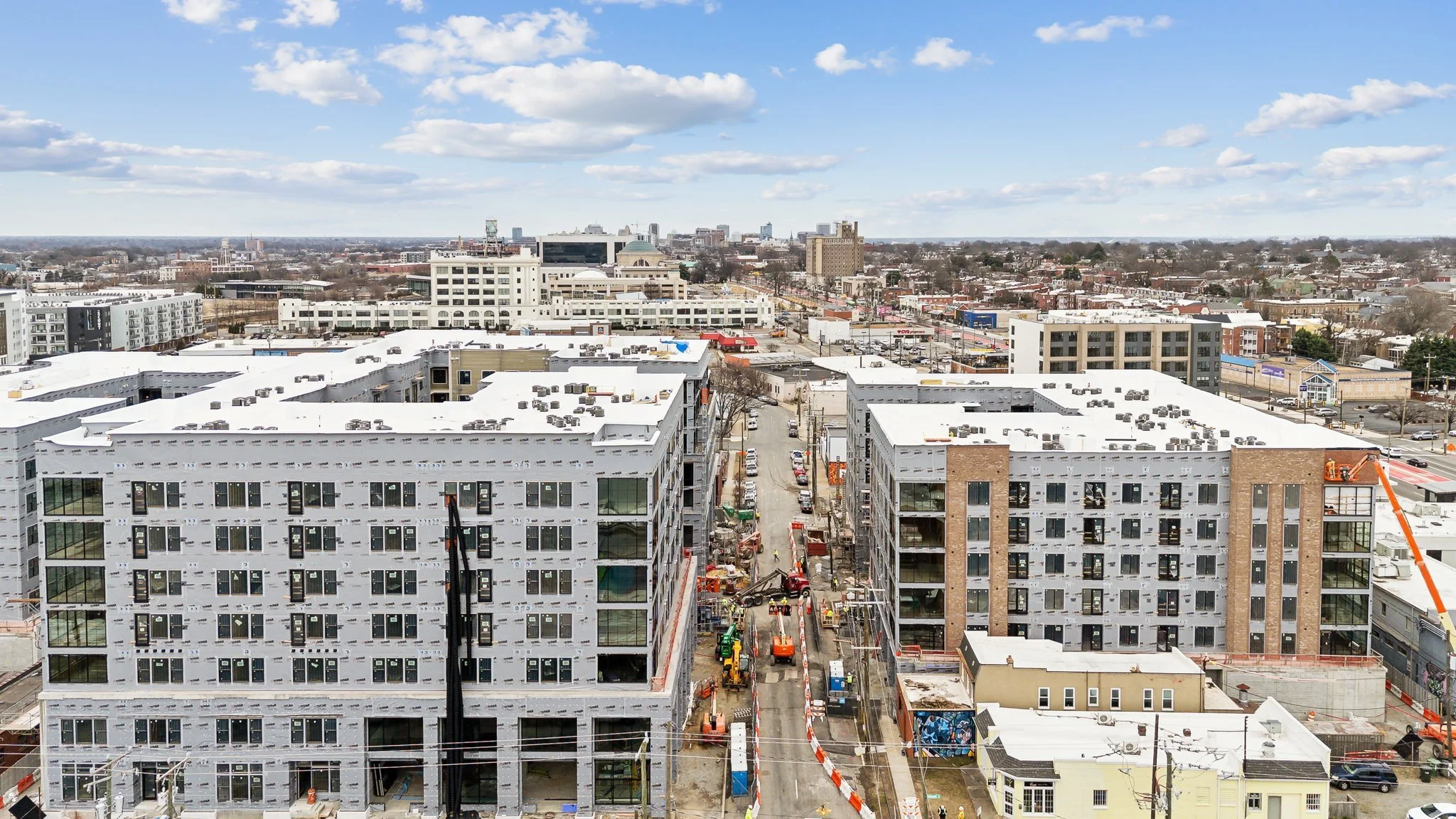
Capital Square’s Opportunity Zone projects include this one in Scott’s Addition.
The Opportunity Zone program is a federal tax incentive designed to attract long-term private investment to low-income census tracts across the country. Created in 2017 and made permanent in 2025, the Opportunity Zone program has attracted an estimated $110 billion in less than 10 years. What began as a niche tax provision has become a cornerstone of tax-advantaged investing and one of the most significant economic development tools in the country.
Opportunity Zone funds in Virginia have financed multifamily housing, commercial centers, and health care facilities. In Richmond’s Scott’s Addition, for example, they helped turn a former warehouse district into one of the city’s fastest-growing residential neighborhoods.
Learn how Opportunity Zones work: Who is eligible to invest? What kinds of capital qualify for the tax benefits? How do investors make an investment, and what should they look for when evaluating an Opportunity Zone opportunity?
Also learn why now is a critical moment for the program. What changes in the program are taking place on January 1, 2027, and how should investors, local officials, and other stakeholders prepare? The new OZ 2.0 designations are likely to see an exceptional amount of development activity.

Leaders from Capital Square, the Henrico County-based firm that has been one of the most active Opportunity Zone developers in the mid-Atlantic, including several projects in Scott’s Addition, will share how an Opportunity Zone project gets started, what kinds of projects qualify, and what Virginia’s Opportunity Zone story has looked like so far. You’ll also hear about the economic impact these developments are having on the communities around them.